
Maritime Insights
Commercial maritime risk
Shipping, maritime security, energy flows, insurance exposure, ports, chokepoints and operational maritime risk.
Decision-focused assessments for organisations exposed to maritime disruption, political instability and evolving security networks across the Red Sea and adjacent regions.

Longer-form public analysis, clearly separate from FA-72 alerts, monitors and Open-Source Assessments. Insights remain free during the Optarus launch period.
Shipping, maritime security, energy flows, insurance exposure, ports, chokepoints and operational maritime risk.
Geopolitical, security, humanitarian and strategic developments across the Red Sea, Gulf, Horn of Africa and connected regions.
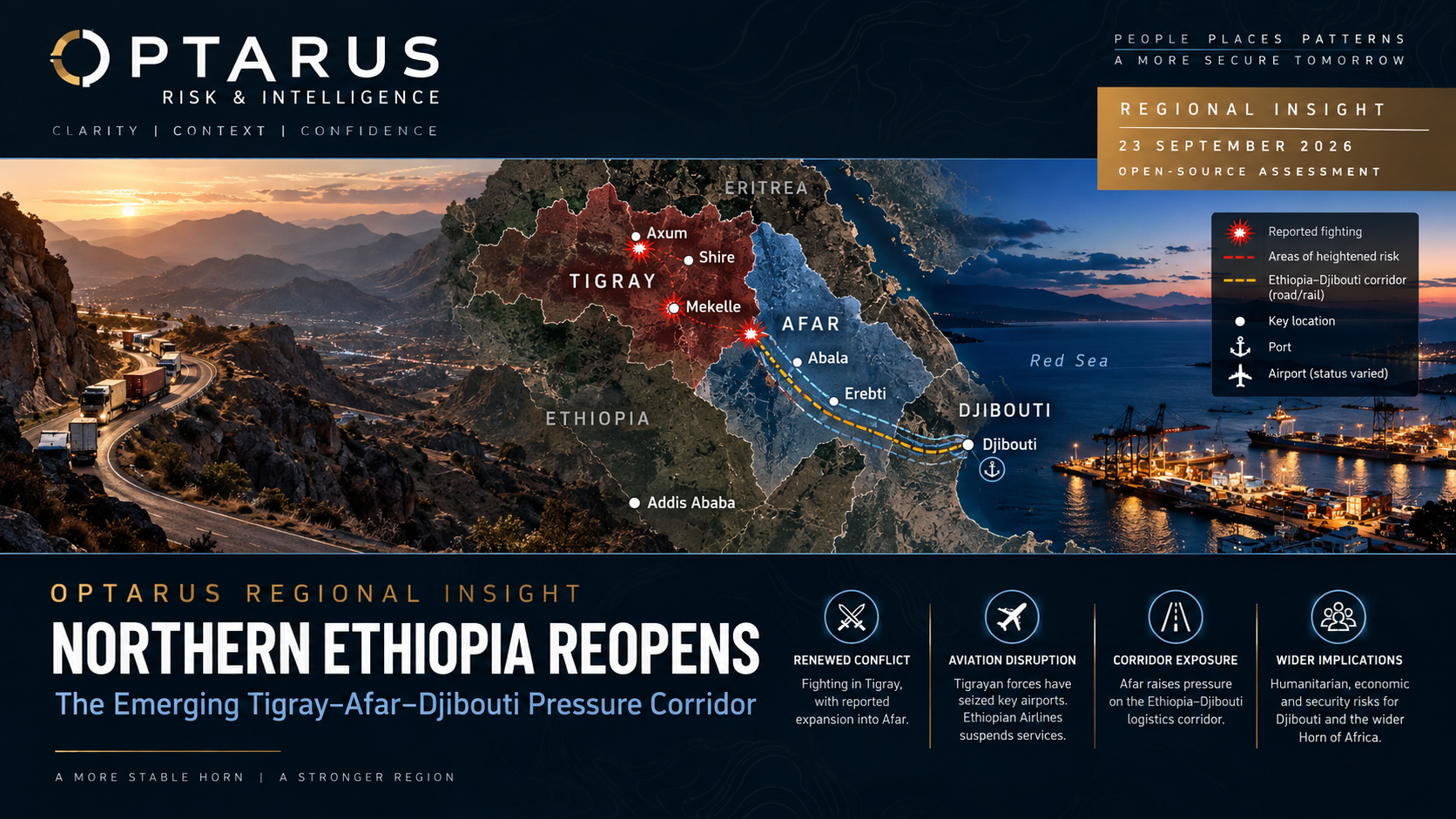
The Emerging Tigray–Afar–Djibouti Pressure Corridor
Afar is the key transmission geography to monitor; current disruption to the Ethiopia–Djibouti commercial corridor is not established.
Free public access · Launch period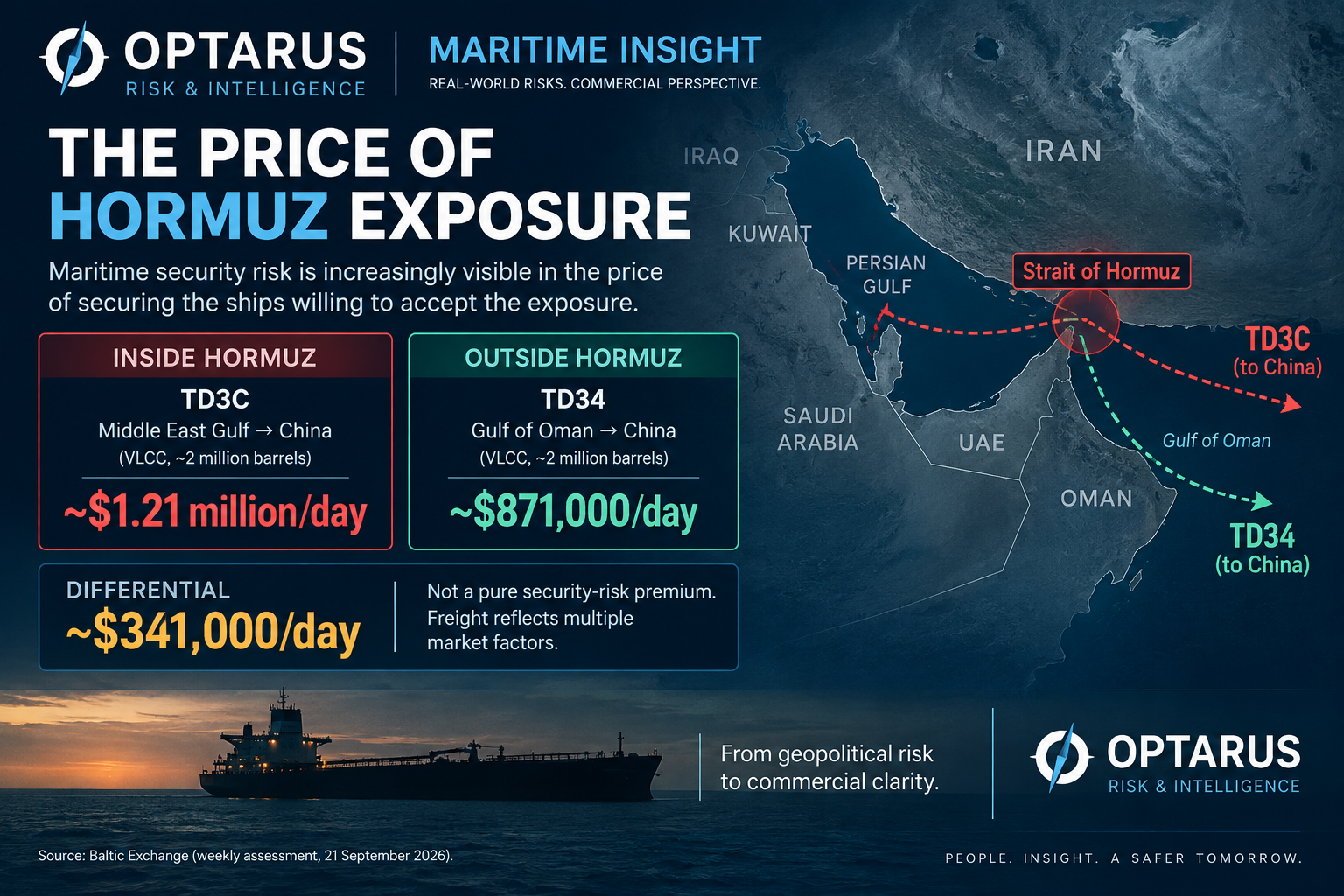
How the Gulf of Oman ship-to-ship transfer system is keeping oil moving — and creating new risk
Free public access · Launch periodWe turn fragmented reporting into structured decision support: what changed, why it matters, how confident we are, who is exposed and which observable indicators could alter the assessment next.
Commercial shipping, ports, chokepoints, threat activity, targeting, capability and counter-maritime posture—showing how operational change affects vessels, routes, crews and insurance.
Geopolitical, security, humanitarian and strategic developments across the Red Sea, Gulf, Horn of Africa and connected regions—separating confirmed facts, assessed relationships and unresolved uncertainty.
How material change reaches energy flows, supply chains, chartering and insurers, with implications for route flexibility, warning time and operational decisions.
A 72-hour Red Sea exposure-change assessment showing what materially changed, who is exposed, why it matters commercially and which indicators matter next.
Each numbered edition tests new reporting against the previous assessment, records changes in judgement and carries unresolved indicators into the next cycle.
FA-72 assessments published up to and including Sunday 4 October 2026 are available as complimentary introductory releases. Membership at the introductory price of £30 per month begins on Monday 5 October 2026.
Each reference remains part of the permanent analytical record. Selected public assessments may remain available after membership begins.
Red Sea Assessment

20 September 2026
This publication examines the developing regional security architecture affecting Red Sea transit, energy infrastructure and commercial exposure. It demonstrates the evidence-led analysis, structured judgments and operational focus available from Optarus Risk & Intelligence.
Download the full assessment ↓Provided as an open-source assessment for informational and decision-support purposes.
OPTARUS is designed for organisations that need a disciplined Red Sea risk picture without maintaining a dedicated maritime intelligence desk.
Persistent review of incidents, actors, ports, routes, capabilities, industry behaviour and warning indicators.
New reporting is tested against the previous judgement, competing explanations and the established threat model.
FA-FLASH notices are intended for material developments that cannot wait for the next scheduled assessment.
Every judgement is connected to potential effects on vessels, insurance, energy assets, routes and supply chains.
Open-source reporting is separated into confirmed fact, attributed reporting, analytical assessment and unresolved hypothesis. Confidence reflects the quality, independence, recency and consistency of the available evidence.
AI supports structured collection, translation assistance, comparison, extraction and drafting. It does not make the final judgement, set confidence, approve allegations or authorise publication. Every external assessment is reviewed and released by the analyst.
Read the full methodologyIntroductory monthly membership from Monday 5 October, with no joining fee and no minimum term.
Professional enquiries may be sent by email. LinkedIn remains available as a secondary contact route.